Alleged in the plaintiff’s complaint:
Armando Labrador and Cantalo TV sued Alexander Otaola and his media companies for defamation, alleging false statements that he was a foreign spy, engaged in fraud, and smuggled YouTubers into the U.S.
Added

Alleged in the plaintiff’s complaint:
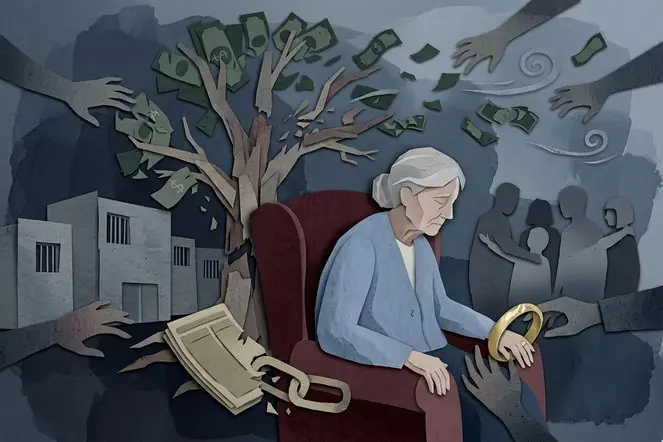
A stroke left a 71-year-old grandmother unable to manage her affairs. Then her 'family' and a nursing home allegedly siphoned off her $400,000 fortune-and she died months later.
Added

Alleged in the plaintiff’s complaint:
A businessman sues his neighbor for a vicious online smear campaign that falsely accused him of murder and corruption, reaching hundreds of thousands of views.
Added

Alleged in the plaintiff’s complaint:
A man's booth at Burger King flips over when he tries to stand, sending him to the ground. Now he's suing the fast-food chain for his injuries.
Added

Alleged in the plaintiff’s complaint:
A Miami Beach hotel project turned into a legal trap. The owners say their high-powered law firm secretly worked both sides, costing them $70 million.
Added
Next: Hearing · Wed, Dec 9
Then: Calendar call · Wed, Jan 27, 2027
A Lutheran synod claims a Miami church secretly handed its Brickell Avenue property to another congregation. Now they're fighting to take it back.
No comments yet. What do you make of this case?
Updates · 53
The judge issued an order about a disagreement over a videotaped deposition (a recorded sworn interview) that CrossBridge wanted to take. This order responds to Cross-Defendant's answer to CrossBridge's amended notice about that deposition.
Both sides agreed to push back two important deadlines: the deadline for expert-related challenges (called a Daubert motion) and the deadline for filing dispositive motions, which are requests asking the judge to decide the case without a trial. This means the case will likely move more slowly.
Someone asked the court to extend the deadlines for Daubert motions (motions about whether expert testimony can be used) and dispositive motions (motions that could end the case). This is important because it could change the case schedule.
Someone filed a response to a motion asking the court to cancel subpoenas (orders to provide information) and to issue a protective order. This matters because it shows the fight over evidence is still going.
A hearing is set for November 5, 2026, from 9:30 to 10:00 AM. People following the case may want to know about this date.
Two people who are not part of the lawsuit, Avila Barreto and Maggie Barreto, asked the judge to cancel subpoenas (legal orders requiring them to provide information) and to protect them from having to give that information. A hearing on their request is scheduled.
The judge signed an agreed order that gives the parties more time to meet important deadlines in the case, including the deadline to file dispositive motions (motions that can end the case without a trial).
One side asked the court to overrule the other side's objections and privilege claims so that certain evidence must be handed over. This is a fight over what information each side has to share.
The parties have scheduled a mediation conference. Mediation is a meeting where a neutral person tries to help both sides settle the case without going to trial.
A party asked the judge for a protective order. That is a request to put limits on something in the case, often to stop someone from being questioned or forced to share information.
A party told the court they plan to question someone under oath before trial. This is called a deposition.
The lawyers changed an earlier plan to question a person who speaks for the Florida-Bahamas Synod of the Lutheran Church. A deposition is when someone has to answer questions under oath before trial.
The plaintiff asked the judge for permission to file a third amended complaint adding new claims against the churches.
Two checks totaling over $130,000 were placed into the court's registry (a holding account for disputed money) while the case continues.
A party asked the judge to punish a witness, David Whitten, for refusing to sit for a deposition (a formal interview under oath), and to order him to appear and pay penalties.
The judge said yes to a church's request to deposit disputed payments with the court instead of holding on to them.
The judge dismissed a third-party complaint against the national ELCA church, saying the court did not have power over it (no personal jurisdiction), though the plaintiff later asked to try again with an amended version.
The judge partly granted and partly denied a request to throw out claims one church made against another church.
The national ELCA church asked the judge to throw out the amended third-party complaint against it.
The judge approved the law firm Callahan & Fusco's request to stop representing one of the churches in the case.
The judge decided how much money the bank that joined the case should get paid for its lawyers.
The judge gave permission for a lawyer who is not licensed in Florida to work on the case.
The judge refused to pause the case, saying the request no longer mattered, and then a party asked the judge to reconsider that decision.
The judge allowed some of the church's counterclaims to move forward and threw out others.
The judge allowed City National Bank, which was holding money connected to the dispute, to become part of the case so the money could be dealt with.
One side asked the judge to rule automatically in its favor because the other party failed to respond in time.
The judge issued a new order setting the trial date and the final pre-trial conference date.
One side urgently asked the judge to push back the trial and extend court deadlines, and the judge issued an order about that request.
A party responded to the claims against it and at the same time made its own new claims against the other side.
Someone filed a motion asking the judge to order the other side to answer questions or hand over information they had been refusing to give.
The plaintiff filed yet another updated version of its complaint, now the second amended version, with revised claims.
The judge said no to the request to dismiss the amended complaint, so those claims will continue forward.
Someone who is not already part of the lawsuit asked the judge for permission to become a party in the case.
The judge set a new date for a jury trial and related hearings. It was later moved again, first to October 12, 2026, and then to February 8, 2027.
After the pause, someone asked the judge to make the case active again so it could move forward.
Everyone agreed to put the case on hold (a 'stay') for 180 days, and the court marked the case as inactive while the pause is in effect.
The judge signed an order letting certain sensitive information in the case be kept confidential and not shared publicly.
The Presbyterian Church asked the judge to strike (remove) certain parts of the amended complaint, arguing those parts were a 'sham' - meaning misleading or not made in good faith.
The Presbyterian Church filed an updated motion to dismiss the amended complaint, plus a written argument (memorandum) explaining why the case should be thrown out.
The plaintiff told the court it was removing one of the people or groups it had been suing, so that party was no longer part of the case.
The Immanuel Presbyterian Church asked the judge to dismiss claims made against it.
A judge agreed to move this complicated case into a special division of the court that handles complex business disputes.
The Immanuel Presbyterian Church asked for extra time, likely to respond to filings or prepare its defense.
A second organization being sued also asked the judge to throw out the claims against it.
An amended complaint is a newer, updated version of the original complaint. It replaces the earlier version and lays out the claims the plaintiff now wants the court to decide.
A document showed that one of the churches had been formally handed the lawsuit papers on May 6, 2024.
The judge set a hearing for May 13, 2024 at 3:15 PM to talk about the emergency request.
Someone asked the judge on an emergency basis to put a temporary block in place and to cancel an earlier emergency order that had been issued without the other side being present.
The church being sued filed its own claims against the other side, arguing they did something wrong too.
A church being sued hired a lawyer and asked the judge to throw the case out before it really begins, saying the lawsuit is legally flawed.
This is the original complaint, the document that starts the whole lawsuit by saying what the person suing thinks went wrong and what they want the court to do about it.
Comments